

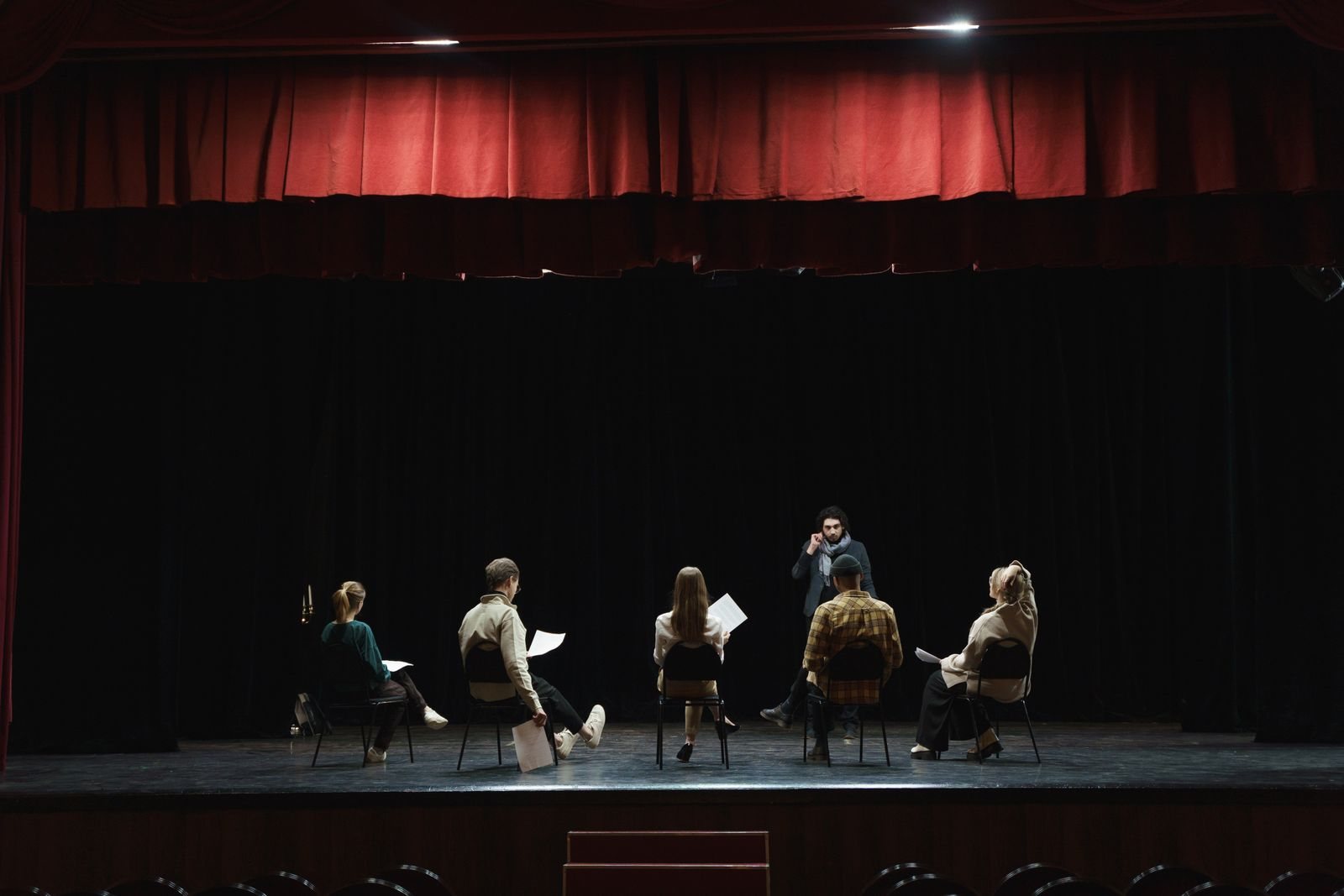
We get it. The agenda is packed, the speakers are busy, and "rehearsal" sounds like something for a school play. But if there's one thing we'd beg you not to cut, it's this one.
What rehearsal is actually for
Rehearsal isn't about making your speakers memorize lines. It's about everybody, presenters and crew, learning how the show really works before the audience is in the room. It's where we find out:
That the video plays, but without sound.
That the speaker's laptop needs an adapter nobody brought.
That the clicker doesn't reach from where they like to stand.
That the CEO wants to come out from stage left, not stage right.
That the panel needs four chairs, not three.
Every one of those is a five-minute fix during rehearsal. During the show, it's a long, quiet pause in front of the whole audience.
Different kinds of rehearsal
Depending on the show, rehearsal can take a few forms:
Tech rehearsal. The crew runs through cues, transitions and content without the presenters, or with stand-ins. This is mostly for us, and we'll handle it.
Speaker run-throughs. Each presenter gets on stage, checks their mic, clicks through their slides on the real screen and gets comfortable with the confidence monitor. Even ten minutes per speaker makes a big difference.
Full run-through. For bigger shows, running the whole thing top to bottom, or at least all the transitions, is where everything clicks. Walk-ups, videos, awards, handoffs between presenters.
"My speaker does this all the time"
We hear this a lot, and it's usually true. Experienced presenters are great. But even the pros don't know this room, this stage, this screen or this crew. A quick walk-through lets them see where the stage edge is, find their light, hear themselves in the room and check that their slides look right. Seasoned speakers tend to appreciate the chance, because they know what can go wrong.
Making rehearsal easy
Schedule it. Put rehearsal on the agenda and on each speaker's calendar, with a specific time. "Swing by when you can" usually means "never."
Keep it short and focused. Speakers don't need to give the whole talk. Walking on, checking the mic, running the first few slides and any video cues, and walking off covers most of it.
Use final content. Rehearsing with last week's deck doesn't help much. Get us the final version before rehearsal so we're testing what the audience will see.
Have a decision-maker there. Questions always come up. It helps to have someone in the room who can make the call.
If you really can't
Sometimes schedules just don't allow it. If that's the case, let us know early. We can do a tech run with stand-ins, test every piece of content ahead of time, and walk each speaker through the basics in a few minutes backstage before they go on. It's not as good as a real rehearsal, but it's a lot better than nothing.
Worth every minute
A good rehearsal is the cheapest insurance your event can buy. It costs a little time, and it saves you from the moments everyone remembers for the wrong reasons. Your audience will never know how many problems you caught the afternoon before. That's exactly how it should be.