

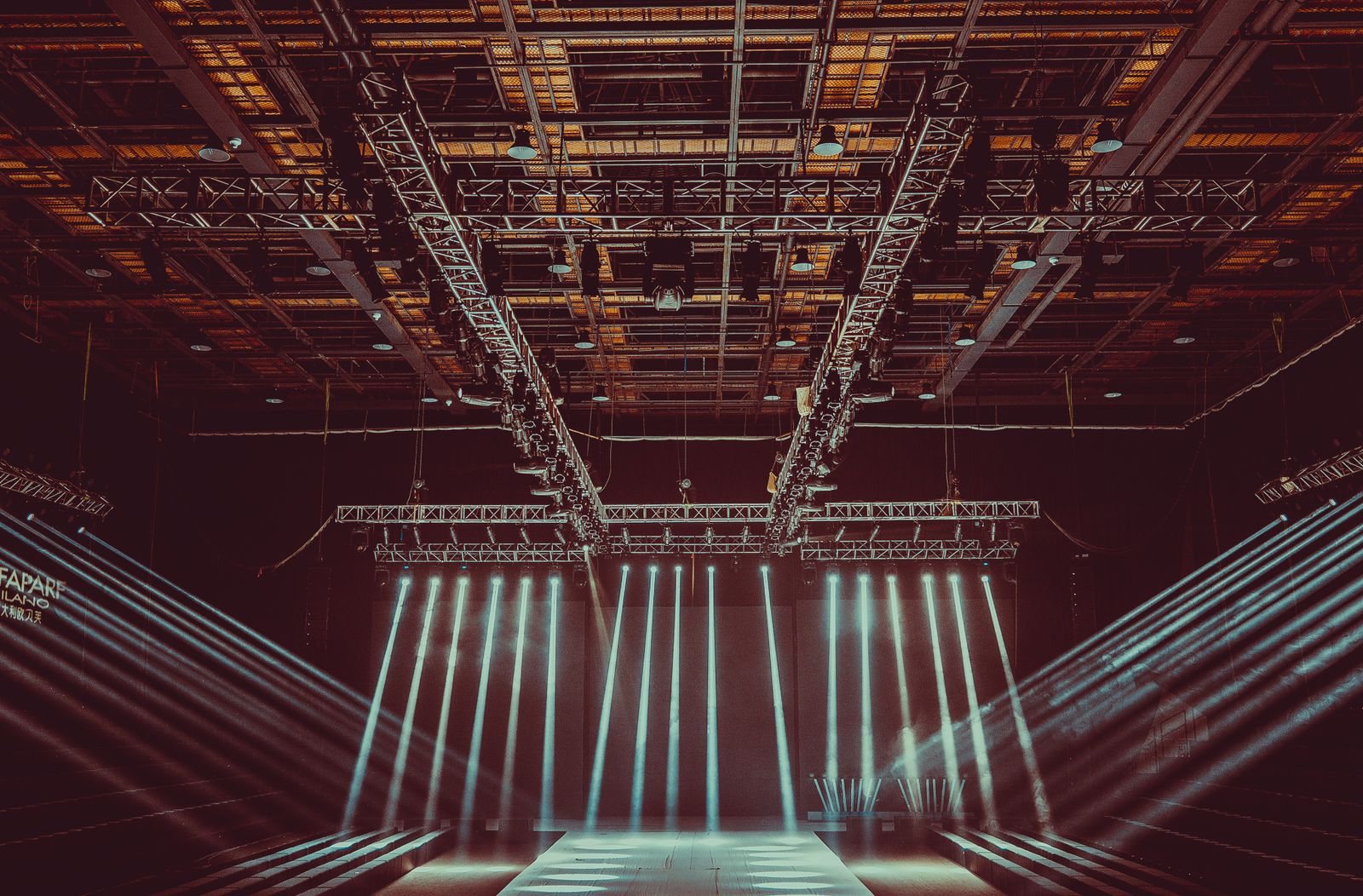
If you walk into the ballroom during load-in, it can look like chaos. Road cases everywhere, people up on lifts, cables running across the floor and somebody saying "check, one, two" for what feels like an hour. It's actually pretty organized chaos. Here's what's going on.
It starts at the loading dock
Everything comes in through the dock, so the dock schedule matters more than most people realize. Venues often have several events loading in and out at the same time, and every truck gets a time slot. If we're late to the dock, or someone else is parked in our spot, the whole day slides.
The freight path matters too. Long hallways, small freight elevators and tight turns all add time. That's one reason we like to walk the venue ahead of time.
Rigging goes first
If anything is hanging from the ceiling (truss, lights, speakers, screens) it usually goes up first, while the floor is still empty. Many venues require their in-house or approved riggers to handle the actual hang points. That's normal, and it's a safety thing, so we plan around it.
Then the build
Once the rig is up, the room fills in. Staging gets built and leveled. Screens or LED walls go together. Lights get hung and pointed. Audio gets placed and wired. Video gear and the tech table go in at the back of the room. Cable gets run and taped down so nobody trips during dinner.
Then focus and testing
When everything is in place, the details start. Lights get focused on exactly where people will stand. The audio system gets tuned to the room, because every ballroom sounds a little different. Video gets lined up so the image fills the screen properly. Every mic, every input, every playback device gets tested.
This is the part that looks like nobody's doing anything. It's actually where the show gets good.
How you can help
Lock the room layout early. Stage position, screen position and the seating plan all affect each other. Moving the stage once the rig is in the air is a big deal.
Know the venue's rules. Dock times, union requirements, rigging policies, power and insurance requirements. Get us the venue contact and we'll sort out the details.
Expect the room to be busy. Catering, decor and the venue's own staff will often be working in the same room. A little patience and some coordination go a long way.
Don't count on an early start. If the room isn't released to us until a set time, that's when we start. Plan your schedule with that in mind.
Get us your content. Load-in day is when we want to start testing presentations and videos on the actual screens. The earlier we have them, the more problems we can catch before rehearsal.
Why it takes as long as it does
People sometimes ask why we need the room the day before. The honest answer is that everything above takes time to do right, and doing it in a rush is how problems sneak into the live show. A calm load-in leaves room for the surprises that always come up.
So if you peek in and see us sitting around a table with a cup of coffee late in the day, don't worry. That usually means the room is built, the systems are tested and we're ready for you.