

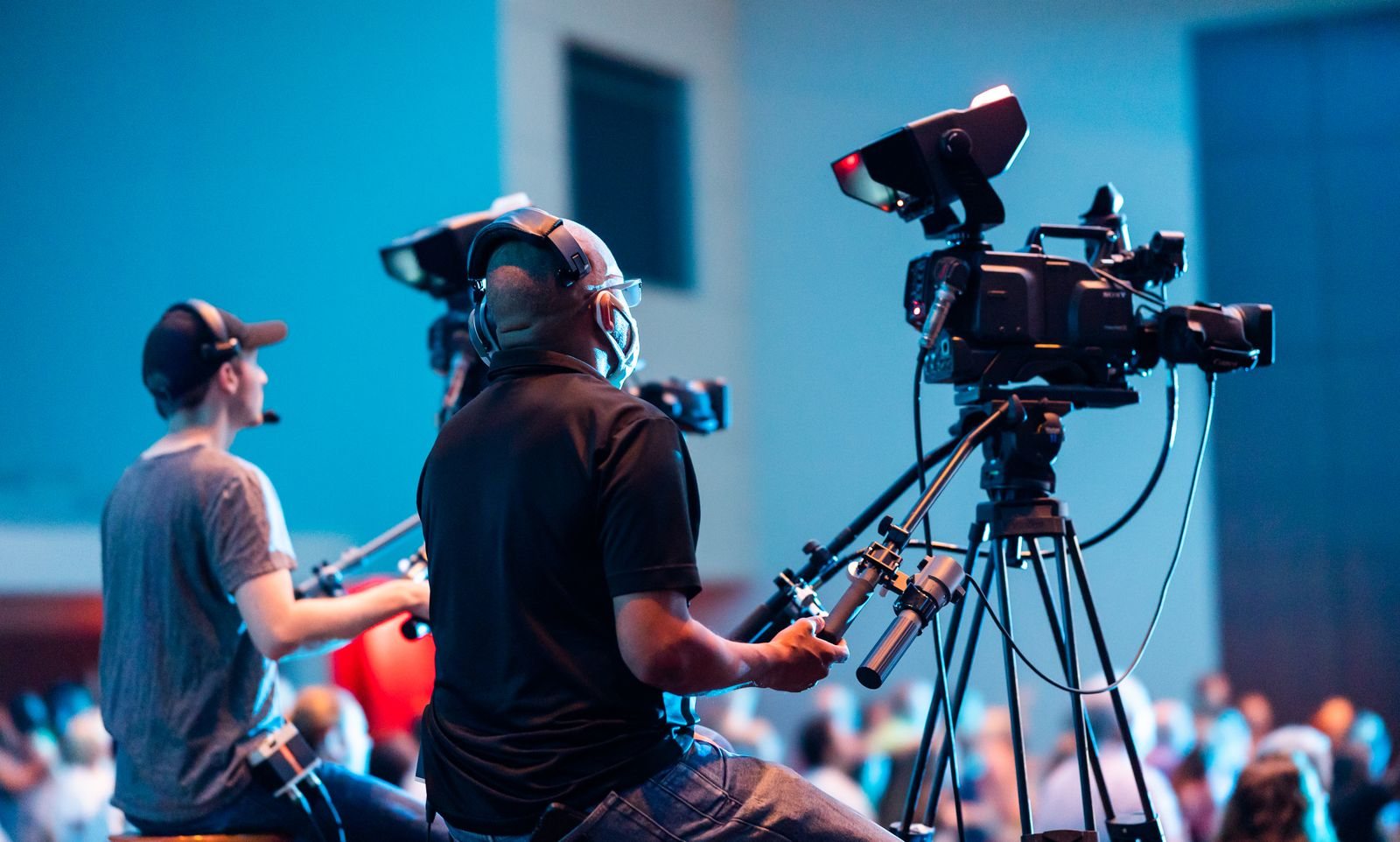
IMAG stands for image magnification. Fancy name, simple idea: point a camera at the person on stage and put them on the big screen so everybody in the room can see their face.
If your room is small, you probably don't need it. But once the back of the room gets far enough from the stage that your CEO looks like an action figure, IMAG stops being a nice-to-have.
Why it matters
People connect with faces. They read expressions, they notice when someone's joking, and they stay engaged longer when they can actually see who's talking. Without IMAG, the back half of a big room is basically listening to a podcast with a tiny person in the distance.
It also helps the speaker. Someone who's a little nervous can work the room more naturally when they know everyone can see them, not just the front tables.
What goes into it
At its simplest, IMAG is a camera, an operator and a way to get that picture to the screens. In practice there's a little more to it:
Cameras. Usually at least one camera out in the room, often on a riser at the back or center so it has a clean shot over the audience. Bigger shows add more angles.
Operators. Someone has to frame the shot and follow the speaker when they decide to wander. A good camera operator makes it look easy, and that's the point.
A switcher and a director. With more than one camera, or when IMAG shares the screen with slides and video, someone is choosing what goes up and when. That's where the show starts to feel produced instead of just recorded.
Lighting. This is the one people forget. Cameras need light on faces. A stage that looks fine to the naked eye can look dark and muddy on camera. Proper front light makes a big difference in how your people look on screen.
A few things to plan for
Sightlines. The camera riser takes up floor space and needs a clean view of the stage. We'll work it into the room layout so it isn't blocking anyone, and nobody's standing in front of it during the keynote.
Screen layout. Will IMAG be on its own screens, or share the main screen with slides? Plenty of shows put IMAG on side screens and content in the center, or split the main wall between both. Decide early, because it affects the design of the whole stage.
A little delay. Video processing adds a tiny delay. A well-built system keeps it small enough that nobody notices the lips being off. It's one more reason to work with people who do this regularly.
Recording. If you're already putting cameras in the room, it's often easy to record the session too. If you want video afterward, mention it up front so it's built into the plan.
Do you need it?
Here's our honest test. Stand at the back of your room and look at the stage. If you can't tell whether the speaker is smiling, you need IMAG. If you can, you might just need good lighting and a solid sound system.
Either way, we'll tell you what makes sense for your room and your audience. The goal is simple: every seat should feel like a good seat.