

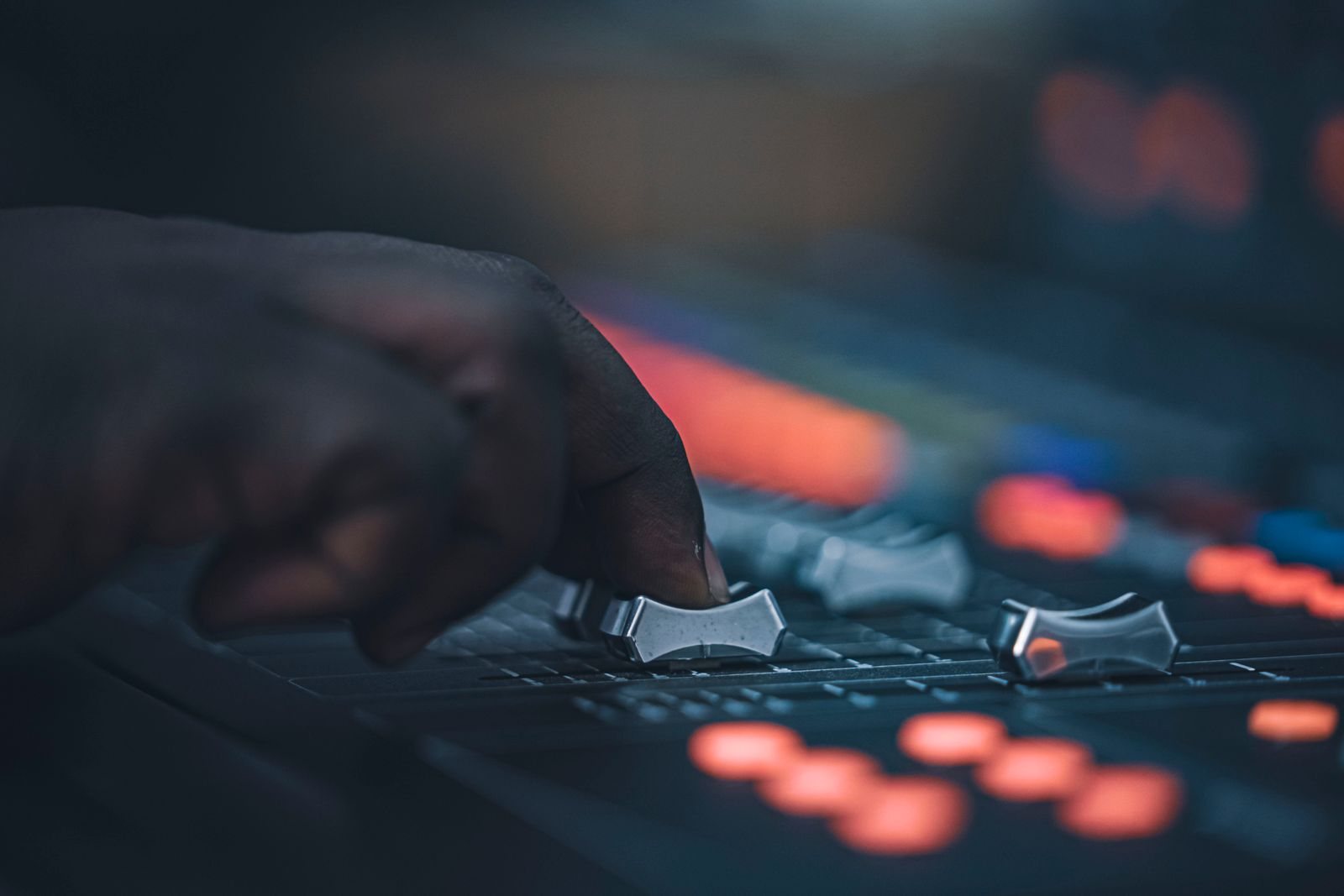
If you've ever stood near the tech table during a general session, you may have heard someone talking quietly into a headset: "Standby walk-in music out, standby lights to stage... lights go. Music go." That's the show caller. Think of them as an air traffic controller who's into PowerPoint.
Why you need one
A corporate show has a lot of moving parts. Audio is bringing up mics. Video is rolling a sizzle reel. Graphics is putting up the speaker's name. Lighting is shifting looks. Someone backstage is sending the next presenter out at exactly the right moment. Every one of those people is good at their job, but if each of them is guessing when to go, you get gaps, overlaps and that awkward moment where the speaker is standing at center stage in the dark.
The show caller watches the whole thing and cues everyone, so it all happens together. That's how you get a walk-up where the music, the lights, the name on screen and the person all show up at the same time.
Where it starts: the run of show
The show caller's bible is the run of show. It's the document that lists every segment, every speaker, every video, every walk-up song, and the order and timing of all of it. From that, the show caller builds a cue sheet with every single moment where somebody on the crew has to do something.
This is why we ask for your agenda early and keep asking for updates. The more the run of show reflects reality, the smoother the day goes. A late change isn't the end of the world. We do this all the time. But it has to make it to the person calling the show.
What it sounds like
Show calling has its own little language. "Standby" means get ready. "Go" means do it now. Callers usually give a standby a little ahead of time, then the "go" right on the moment. Keeping it short and consistent matters, because when things get busy, nobody has time for a paragraph on headset.
When things go sideways
This is where a good caller earns it. The CEO runs ten minutes long. A video won't play. A presenter skips half their slides. The award winner isn't in the room. The show caller adjusts on the fly, talks the crew through the change and keeps the audience from ever knowing anything happened.
A lot of that comes down to communication with you. We'll want one person on your side, usually the planner or a producer, who can make decisions in the moment. "Do we cut the second video or push the break?" needs an answer in seconds, not a committee.
Why rehearsal matters to the caller
Rehearsal is where the show caller learns the rhythm of your show. How long the walk to the podium really takes. What the speaker says right before they want the next video. Which presenter is going to go off script. Every rehearsal makes the live show calmer, for us and for you.
What you'll notice
If the show caller does their job, you won't notice them at all. The show just flows. People walk on to music, their names appear, the videos roll on time, and the whole thing feels like it was meant to happen that way.
Which it was. Somebody was just counting it down.